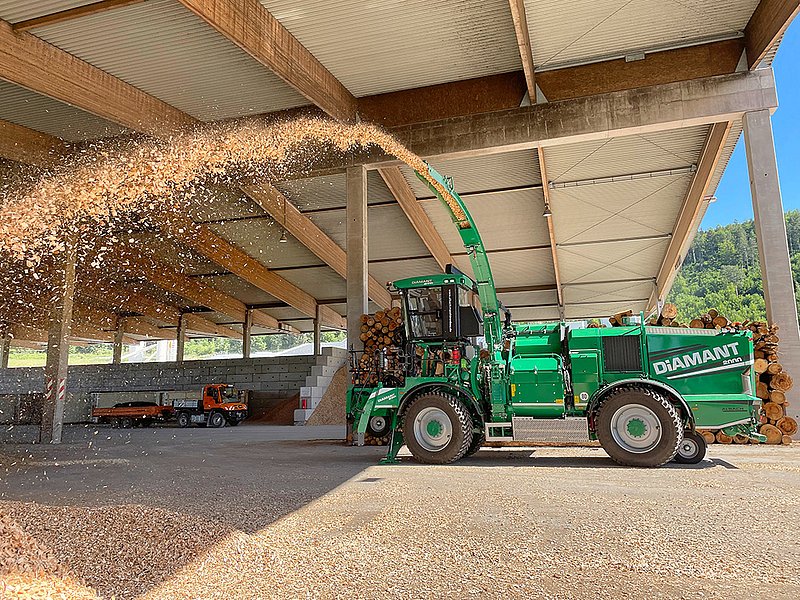
ALBACH Diamant 2000 complies with GSR II: Future-proof safety technology for heavy commercial vehicles
With the entry into force of the European General Safety Regulation II (GSR II) on 7 July 2026, the requirements for safety, digitalisation and cybersecurity in the commercial vehicle sector will increase significantly. For N3G class vehicles, this means a host of new technical and organisational requirements that must be met in order to obtain Europe-wide type approval.
The ALBACH Diamant 2000 already fully meets these requirements today. All homologation issues have been successfully resolved since mid-March. The vehicle is therefore ideally prepared for the upcoming legislation and, at the same time, sets new standards for safety and system integration in the field of high-performance specialist vehicles.
Modern driver assistance systems for greater road safety
A central component of the new regulations are assistance systems that prevent accidents and actively support the driver. The Diamant 2000 utilises several camera-based and sensor-based systems for this purpose.
The forward collision warning system detects pedestrians and cyclists in the area in front of the vehicle – both when stationary and whilst driving. A camera combined with trained AI analyses the surroundings and triggers a clear warning message in the cab in the event of danger.
The blind-spot assistant also enhances road safety. On the right-hand side of the vehicle (mirrored accordingly for left-hand traffic), two AI-assisted cameras monitor the area next to the vehicle and detect cyclists or other road users there in critical situations. The driver is immediately alerted visually.
At the rear, the rear collision warning system provides additional safety. Sensors detect people or obstacles behind the vehicle and alert the driver via audible and visual warning signals.
Intelligent monitoring of vehicle systems
In addition to environmental detection, the GSR II also requires comprehensive monitoring of key vehicle components.
The tractor unit’s tyre pressure monitoring system continuously checks pressure, temperature and potential pressure losses. A particular technical challenge with the Diamant 2000 is the wide variety of tyre sizes with varying volumes and pressure ranges.
In future, trailers must also be equipped with tyre pressure sensors. The corresponding signals are read and processed in the tractor unit. For this purpose, a dedicated electronic interface with a specially developed control unit has been implemented, which immediately informs the driver of any deviations.
Another safety-related component is the emergency braking warning system. If the vehicle’s deceleration exceeds a defined threshold, following road users are automatically informed of the heavy braking.
Cybersecurity and software management at a new level
With the increasing digitalisation of commercial vehicles, protection against cyberattacks is also becoming increasingly important. For this reason, a comprehensive cybersecurity management system (CMS) has been introduced within the company.
This system aims to identify and minimise potential attack vectors at an early stage. This includes, amongst other things, encrypted communication links, clear access regulations, regular training, access controls and comprehensive backup strategies. A structured process for handling security incidents has also been defined. A specially established Cybersecurity Response Team, led by a designated CS Lead, coordinates all measures in the event of an emergency.
In parallel, vehicle security has also been thoroughly tested. Several penetration tests examined all communication interfaces – including Bluetooth, radio connections, Wi-Fi, CAN bus, Ethernet and USB interfaces. The systems have been successfully secured against external attack scenarios. Furthermore, many electronic components and communication channels are no longer freely accessible.
Another key component is the new Software Update Management System (SUMS). This ensures a secure and fully traceable update strategy for vehicle software. Every step is documented and secured, from the initial fault report through development and validation to installation in the vehicle. Each vehicle receives an individual, encrypted software update secured by checksums.
Intelligent driver assistance and new safety standards
GSR II also introduces new functions to support the driver in daily use.
The Intelligent Speed Assistant with traffic sign recognition provides the driver with visual and audible prompts regarding the maximum permitted speed at all times. The system detects traffic signs via a camera, combining this information with AI algorithms, GPS data and a specially developed offline navigation system. This enables it to reliably determine the relevant road type and the permitted speed for the vehicle throughout Europe.
In addition, the vehicle features an interface for integrating an alcohol interlock. This allows a system to be installed at any time that prevents the vehicle from continuing its journey if the driver is under the influence of alcohol.
Regulations have also been updated in the area of ergonomics. A completely new seat design has therefore been implemented for the Diamant 2000, which meets current regulatory requirements whilst also enhancing driver comfort.
Future-proof on Europe’s roads
By fully implementing all GSR II requirements, the ALBACH Diamant 2000 demonstrates how modern commercial vehicles can intelligently combine safety, digitalisation and driver assistance.
Early compliance with the new EU regulations not only underlines the company’s technical innovation, but also ensures that operators and drivers can already rely on a vehicle today that meets tomorrow’s safety standards.